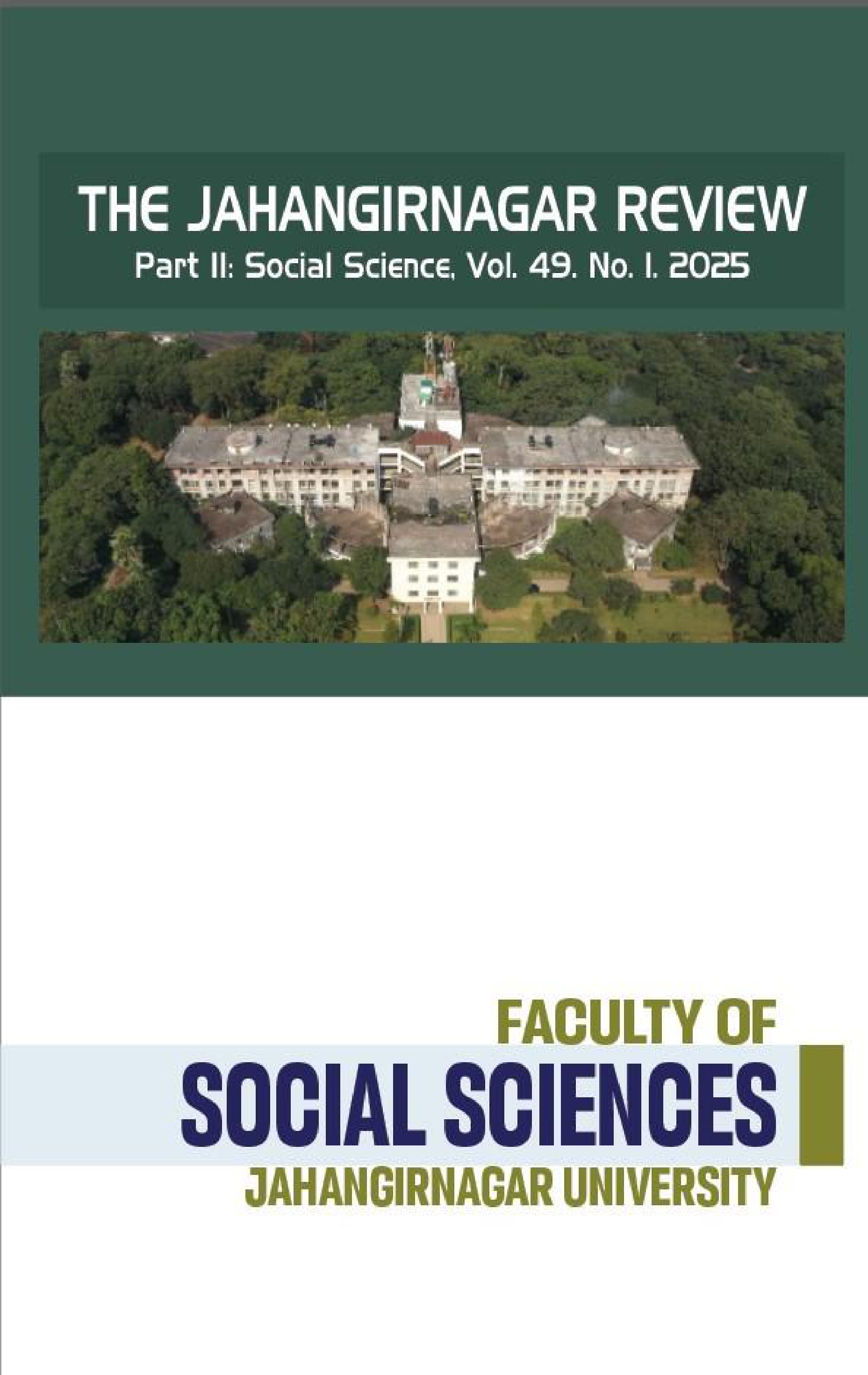
Mapping the Future Trajectory of Bangladesh-India Relations:
A Strategic Analysis
DOI:
https://doi.org/10.59185/tjr.v49i1.219Keywords:
Bangladesh, India, Bangladesh-India Relations, Diplomacy, Track2 Diplomacy, Economic Cooperation, Mapping, TrajectoryAbstract
This research paper investigates into a comprehensive strategic analysis of the future trajectory of Bangladesh-India relations, aiming to provide nuanced insights into their evolving dynamics. Beginning with an exploration of historical contexts, it navigates through the intricate web of current bilateral dynamics, considering the impacts of historical legacies on contemporary relations. Moreover, it meticulously examines key geopolitical factors shaping the relationship, ranging from regional power dynamics to transnational challenges. Through a multidimensional lens, the paper identifies a spectrum of opportunities and challenges, offering strategic recommendations to leverage cooperation and mitigate potential areas of contention. By dissecting the political landscape, it scrutinizes governance structures and diplomatic strategies, uncovering avenues for diplomatic engagement and conflict resolution. Furthermore, the economic dimension is scrutinized to assess the potential for trade expansion, investment collaboration, and infrastructure development, identifying pathways for mutual growth and prosperity. In the realm of security, the paper probes into shared challenges such as terrorism, border security, and maritime cooperation, emphasizing the imperative of joint efforts to address common threats. Cultural exchanges and people-to-people contacts are analyzed to gauge their role in fostering understanding and trust, laying the groundwork for sustainable relations. Ultimately, this paper aspires to offer actionable insights into fostering a stable and mutually beneficial relationship between Bangladesh and India in the coming years. By synthesizing findings across political, economic, security, and cultural dimensions, it seeks to guide policymakers and stakeholders in navigating the complexities of this critical bilateral relationship.